SpinShark Crypto Payments: Bitcoin, USDT and More
 Available in GB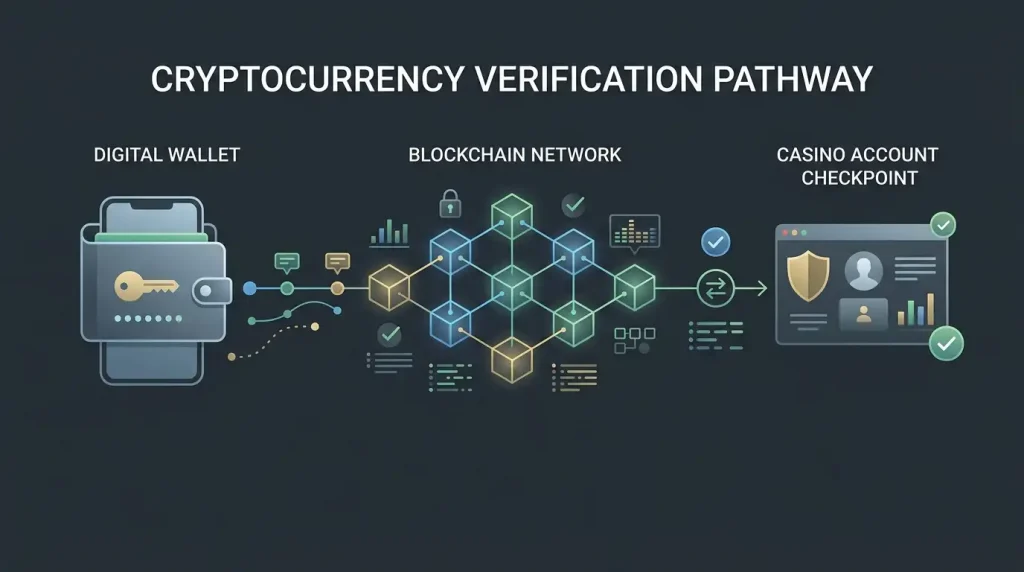
Table of Contents
- Which cryptocurrencies are supported at SpinShark?
- Coin name and blockchain network are two separate checks
- A crypto deposit can change value before and after it reaches the casino
- A small first transaction can reduce avoidable address mistakes
- Using crypto does not mean anonymous play or no KYC
- Gambling winnings and crypto-asset tax questions are not the same thing
- When a crypto deposit is a practical choice
- When crypto makes sense for a SpinShark payment – and what it does not remove
- A crypto deposit has three separate checkpoints
- How to approach a crypto withdrawal request
Section element
Crypto payments
SpinShark supports cryptocurrency payments. Bitcoin (BTC), Tether (USDT), Dogecoin (DOGE) and Litecoin (LTC) are the most consistently listed crypto options. Some current sources list additional assets, but the wider coin catalogue is not consistent enough to freeze into a permanent list. UK users should therefore treat those four as the verified core and check the live cashier for the exact asset and network before sending funds.
Crypto does not remove account verification, withdrawal checks or the need to match the destination address exactly. It also introduces network fees, exchange-rate movement and irreversible-transfer risk that do not apply in the same way to ordinary card or e-wallet deposits.
Section element
Verified support
Which cryptocurrencies are supported at SpinShark?
BTC, USDT, DOGE and LTC are the most consistently listed supported assets. That is the useful answer for a player deciding whether SpinShark can handle mainstream crypto deposits.
| Asset | Current confidence | Practical check before transfer |
|---|---|---|
| Bitcoin (BTC) | Verified core support | Confirm the displayed deposit address and any minimum shown in the cashier. |
| Tether (USDT) | Verified core support | Confirm the blockchain network as well as the token name. |
| Dogecoin (DOGE) | Verified core support | Use the exact address generated for DOGE. |
| Litecoin (LTC) | Verified core support | Check the live cashier before sending because limits can change. |
Other assets are mentioned by some sources, including TRX and XRP, but the source set is not fully consistent. A short core list is more useful than a long catalogue that can become stale as cashier options, supported networks and account availability change over time regularly. For the wider funding picture, see the SpinShark payment methods guide.
Network accuracy
Coin name and blockchain network are two separate checks
USDT is the clearest example of why this matters. A token can exist on more than one blockchain, and a wallet may offer several withdrawal networks for the same asset. Sending a supported token over the wrong network can leave the casino unable to credit the transfer automatically.
The safe workflow is simple: open the SpinShark cashier, select the asset, copy the address exactly and use only the network shown for that deposit. Do not rely on an address saved from a previous transaction. A fresh cashier screen is a better source than an old review, live view or personal note.
Value movement
A crypto deposit can change value before and after it reaches the casino
Crypto adds price movement to an otherwise simple payment decision. BTC, DOGE and LTC can move materially in fiat value between purchase, transfer and later withdrawal. Even a stablecoin such as USDT removes only part of that problem because exchange spreads, conversion rates and network fees can still affect the final amount.
That means the cheapest-looking route is not always the cheapest route overall. A user buying crypto specifically to make one casino deposit may face an exchange purchase spread, an exchange withdrawal fee and later conversion costs. Someone who already holds a supported asset may have a different cost profile.
This page does not promise zero fees or instant settlement. Blockchain confirmation times and third-party wallet charges are outside the casino’s direct control, and exact casino-side limits should be checked at the moment of payment.
First transfer
A small first transaction can reduce avoidable address mistakes
When your wallet and the cashier allow it, a smaller first transfer can be a sensible operational check before moving a larger amount. It can confirm that the destination address, chosen network and account-crediting process work as expected. That does not eliminate blockchain risk, and it may create an extra network fee, so the approach is not automatically cheaper.
The important point is to verify the full route before assuming a previous successful transfer will always repeat. Deposit addresses, supported networks and minimums can change. Open the current cashier each time, compare the details with your wallet, and keep the transaction record until the account balance updates.
Verification
Using crypto does not mean anonymous play or no KYC
SpinShark requires account verification in circumstances covered by its player checks, and crypto support does not override that process. A blockchain transaction may be pseudonymous at the network level, but a casino account still contains registration details and can be subject to identity, payment-source or withdrawal verification.
This distinction is important because many crypto-casino pages use phrases such as “anonymous” or “no KYC” as marketing shortcuts. Those claims are not supported here. If a withdrawal triggers verification, the practical issue is the same as with another payment method: the account holder may need to complete the requested checks before funds are released.
The separate SpinShark withdrawals guide covers cashout preparation without inventing exact processing times or document lists.
UK tax distinction
Gambling winnings and crypto-asset tax questions are not the same thing
Ordinary gambling winnings for customers are not taxed as gambling income in the UK. That fact does not answer what happens when a person buys, sells, swaps or otherwise disposes of crypto assets. Those are separate transactions with their own tax treatment and personal circumstances.
The UK gambling-winnings rule should therefore be kept separate from capital-gains or crypto-disposal questions. A player who moves between GBP and crypto should keep records of acquisition and disposal and use official tax guidance or professional advice for any crypto-specific tax question.
Decision checklist
When a crypto deposit is a practical choice
Crypto can be useful when you already hold a supported asset, are comfortable checking blockchain networks and prefer not to route the payment through a conventional card or e-wallet. It is less attractive when you would need to buy crypto only for the deposit, do not understand network selection, or want a payment route with simple fiat-value accounting.
Before choosing it, compare the total friction rather than the deposit label. Check wallet fees, exchange spreads, network compatibility, verification requirements and how you expect to receive a later withdrawal. The SpinShark licence and trust page is also worth reading separately because a payment technology does not establish regulatory status.
Practical fit
When crypto makes sense for a SpinShark payment – and what it does not remove
BTC, USDT, DOGE and LTC form the verified core of SpinShark’s current crypto support. That makes crypto a genuine funding option, but not a shortcut around normal account controls. Network accuracy, irreversible transfers, external fees, price movement and possible KYC still matter.
Use the live cashier as the final source for the exact asset, network and transaction limits before every transfer. If you want a broader comparison with conventional methods, return to deposits and payments or the full SpinShark review.
A crypto deposit has three separate checkpoints
The verified asset list is only the first checkpoint. The second is the network displayed for the selected asset, and the third is the destination address created by the cashier for that transaction. Treating those three details separately reduces the chance of copying a familiar coin name while overlooking a different transfer network or an outdated address. This is particularly relevant to USDT because the same token name can appear across multiple blockchains.
The transfer record is useful after sending as well. A wallet or exchange normally provides a transaction identifier that can be retained while the payment is being credited. That identifier records the blockchain transaction itself; the casino balance is a separate account state. Keeping both pieces of information makes it easier to distinguish a completed network transfer from the later account-crediting step if support is needed.
Crypto support also sits alongside GBP support rather than replacing it. The broader SpinShark payment picture includes conventional payment categories as well as digital assets, so the best route depends on the options visible in the account cashier. For crypto, the live cashier remains the decisive place to confirm the supported asset, network and any displayed minimum before moving funds.
How to approach a crypto withdrawal request
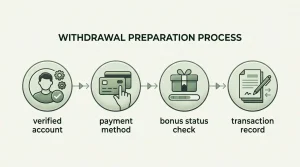
The same accuracy principle applies in reverse when a crypto withdrawal option is available. Select the intended asset carefully, check the destination wallet details, and review the account’s verification and bonus status before submitting the request. Crypto payments are available, while exact withdrawal speeds and fees can change and belong to the live account flow rather than a fixed promise.
That separation is important because blockchain confirmation time and casino processing time describe different stages. A fast network cannot establish how long an account review or withdrawal approval will take. Comparing those stages independently gives a more useful picture of the process and avoids treating the technology behind the asset as a guarantee about the operator’s handling time.